

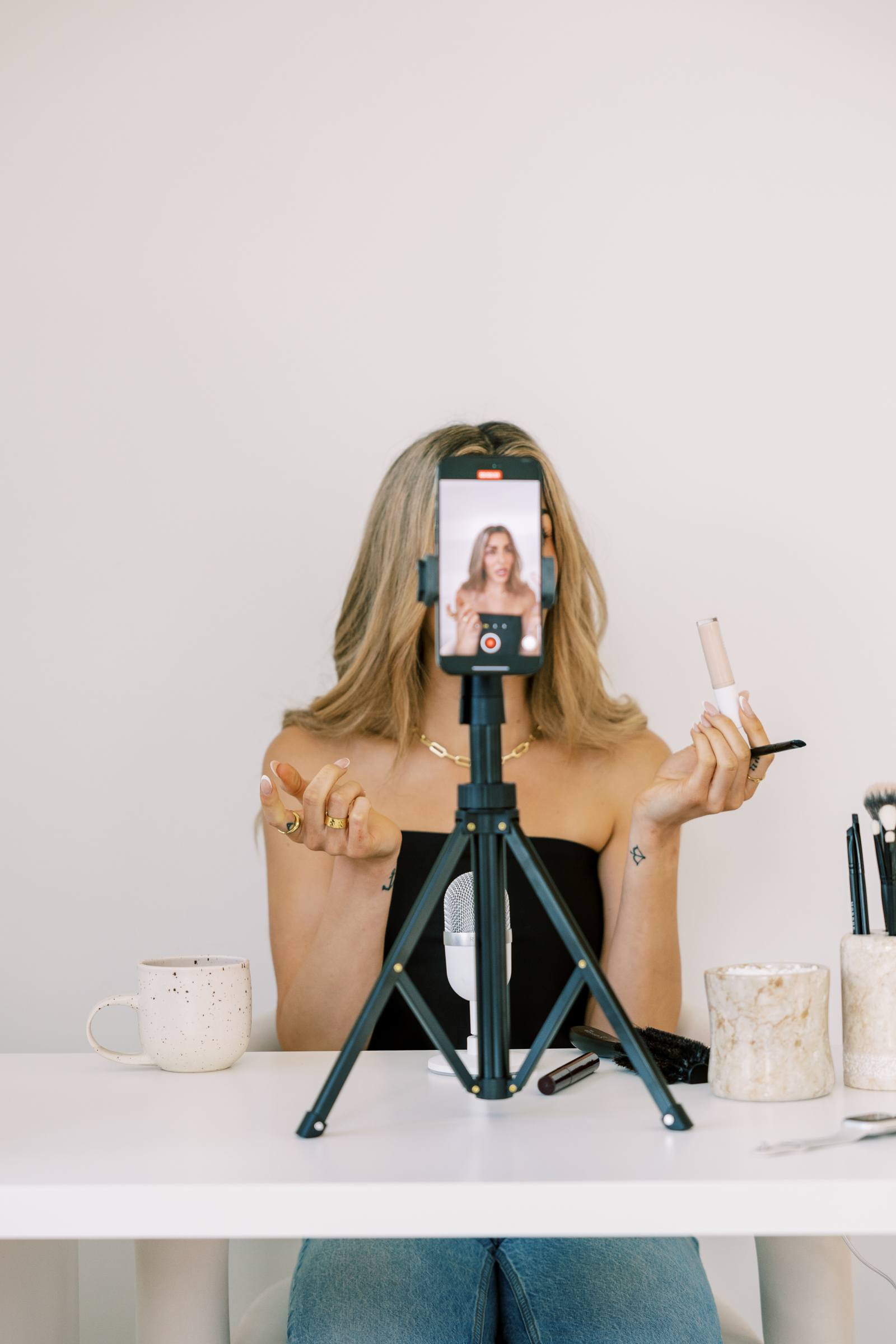


The other day, I took a brain break the way I always do: losing myself in the beauty aisle. I was strolling down the aisle when I found theee perfect highlighter. It caught my eye because it gave that effortless glow without looking like you dipped your face in glitter (IYKYK 😅).
It was sooo good that I felt the need to tell everyone about it because ya girl is a freak for a good highligher (can’t help it, it’s a staple in my daily makeup routine!)
That’s exactly the energy your emails should create when people read them.
Unfortunately, most brand emails feel like that highlighter you bought online that looked amazing in the photos but showed up looking like craft store body glitter. Pretty disappointing, right?
The difference between emails that get people excited to buy and emails that get deleted is understanding what makes people want to click “add to cart” instead of just admiring your products from a distance.
Just like finding that perfect highlighter took more than pretty packaging (the formula, the finish, how it feels), creating emails that convert takes more than beautiful design.
If you want your emails to convert better, you need to understand what actually motivates people to take action. And it’s not just about having a cute subject line and a bright CTA button.
Why Most Emails Don’t Convert (Even When They Get Opened)
Most founders approach email like they’re writing a newsletter. They share updates, announce new products, and maybe throw in a discount code at the end. But converting emails need a different approach.
They tap into specific psychological triggers that make people want to act now instead of “maybe later” (which we all know means never).
The brands that see the highest email conversion rates understand that every element of their email should guide readers toward one specific action rather than five different next steps, or a general “check out our stuff” vibe.
So what is it that you need? ↓↓↓
The 7 Conversion Elements Your Emails Need
1. A Clear Value Proposition (Not Just Product Features)
In 2025, people read features but more importantly, they buy outcomes. Your emails need to connect your product to a specific result your reader wants.
For example, here’s a generic feature: “Our vitamin C serum contains 20% L-ascorbic acid”
But why not start with the outcome, like this: “The serum that faded my dark spots in 6 weeks (without irritation)”
The second version tells me exactly what I’ll get and addresses a concern I probably have. It’s specific, benefit-focused, and relatable.
Your value proposition should answer the question: “What’s in it for me?” within the first few lines of your email. Don’t make people work to figure out why they should care.
2. Social Proof That Feels Real (Not Manufactured)
Generic testimonials like “Great product! Five stars!” don’t get people to buy. But specific social proof that addresses common objections will be a main reason your product converts.
Effective social proof includes:
- Specific results: “This foundation lasted through my wedding day, including happy tears”
- Relatable situations: “Perfect for busy moms who need skincare that truly works”
- Before/after transformations: “My skin went from constantly breaking out to clear in 8 weeks”
3. Urgency That Makes Sense
Most founders use fake urgency, and people can smell it from miles away. “Limited time offer!” when the same sale runs every month doesn’t fool anyone. (Ew).
True urgency comes from genuine scarcity or time-sensitive opportunities:
- Limited inventory: “Only 12 left in stock”
- Seasonal relevance: “Perfect timing for holiday parties”
- Personal deadlines: “Last chance before I leave for vacation”
The key is making the urgency feel authentic and relevant to your specific situation, not like a marketing tactic you copied from someone else.
4. One Clear Call-to-Action (Not Seven)
This might be the biggest mistake I see. Founders include multiple links, buttons, and CTAs thinking they’re giving people options. But choices create decision paralysis. (Info overload is real!)
Your email should have one primary action you want people to take. Everything else is supporting that main goal.
If you want them to shop your new collection, don’t also ask them to follow you on Instagram, read your blog post, and sign up for your workshop. Pick one thing and make it hard to say no to.
5. Benefit-Driven Copy (Not Feature Lists)
Features tell, but benefits sell. Your email copy should focus on how your product improves someone’s life rather than what it contains.
Instead of listing ingredients or specifications, paint a picture of the transformation:
- How will they feel after using your product?
- What problem will disappear from their life?
- What will become easier or more enjoyable?
When you want your emails to convert, every sentence should move your reader closer to imagining themselves with your product and loving the results.
6. Personalization Beyond First Names
In this day and age, using someone’s first name in the subject line isn’t personalization. Almost all email service providers have this as a basic email functionality. If you want to deliver true personalization, you need to send relevant content based on their interests and behavior.
This could mean:
- Recommending products based on past purchases
- Referencing how they found your brand
- Acknowledging their subscription anniversary
- Tailoring content to their quiz results or preferences
The goal is making each subscriber feel like you knowww them, not like they’re just another email address on your list.
7. Clear Next Steps (Remove All Friction)
Your CTA button shouldn’t just say “Shop Now.” It should remove any hesitation about what happens next.
Better CTA examples:
- “See the full collection” (when featuring one product)
- “Find my shade” (for beauty products)
- “Get free shipping” (when that’s a key benefit)
- “Start my routine” (for skincare)
Make it crystal clear what someone will see when they click, and remove any barriers that might make them hesitate.
The Psychology Behind Email Conversions
Converting emails deliver results because they tap into both the heart and the brain when someone’s deciding whether to buy.
On the emotional side, people want to feel like you actually get them. They want to feel special (not like subscriber #4,847) and get genuinely excited about how your product could change their routine, their confidence, or their day-to-day life.
On the logical side they’re doing the mental math. “Is this worth my money? Does it truly deliver what it promises? Have other people tried this and loved it, or am I about to become someone’s expensive experiment?”
The seven elements above hit both sides perfectly. Social proof makes them think “okay, this actually delivers.” Urgency gets them excited enough to stop overthinking. Clear benefits help them picture their life with your product in it. And obvious next steps mean they don’t have to guess what happens when they click.
How to Implement These Elements Without Sounding Salesy
The brands with the highest email conversion rates sound like they’re helping.
Instead of writing emails that scream “BUY MY STUFF!” they write emails that feel like your friend sharing something that totally changed her routine. They talk about how someone’s morning skincare ritual went from chaotic to calming, not about peptides and retinol percentages.
And their social proof is passed the generic, “OMG love this! ⭐⭐⭐⭐⭐” It addresses the stuff people worry about at random hours of the day. Like “This didn’t break me out even though I have sensitive skin” or “Finally, a mascara that doesn’t flake off during my 3pm crying session at work.”
Bottom line, you can still sell but with a completely different energy.
Common Conversion Mistakes That Ruin Results
Now, before you go adding all seven elements to your next email and wondering why people still aren’t buying, there are some mistakes that can sabotage your efforts. (Trust me, I’ve seen these way too many times):
Mistake 1: Trying to sell everything at once. Your email should focus on one product or one collection. Don’t overwhelm people with choices.
Mistake 2: Burying the main message. If someone has to scroll to understand what you’re offering, you’ve lost them. Lead with your strongest benefit.
Mistake 3: Weak or confusing CTAs. “Learn more” and “Click here” are boringgg. Your CTA should be specific and compelling.
Mistake 4: No sense of urgency. Without urgency, people will save your email for later (and never come back to it).
Mistake 5: Generic social proof. Testimonials should address specific objections, not just say your product is “amazing.”
Cool, so now you know what not to do. But even when you nail all of this, you still need to figure out what clicks with your people specifically.
Testing What Resonates With Your People
Not every conversion element is going to hit the same for every brand. What gets my skincare-obsessed audience clicking might completely miss the mark for someone selling fitness gear or jewelry.
The key is testing one thing at a time instead of throwing all seven elements into one email and hoping something sticks. Maybe your people love a good customer transformation story but couldn’t care less about statistics. Or maybe they need that “only 3 left!” urgency to take the next step.
Start paying attention to which emails get people clicking and buying, then figure out what made them irresistible. Was it the way you described the benefit? The specific social proof you shared? The urgency that felt real instead of manufactured?
Testing isn’t the most exciting part of email marketing (I know, I know), but it’s how you start knowing what gets your audience to raise their hand and say, “YUP, this is me. I want this.”
Turn Every Email Into a (Subtle) Sales Opportunity
Most founders think only their promotional emails should sell anything. But the reality is that every single email you send is a chance to gently guide someone toward a purchase.
The next time you’re writing a welcome sequence, think of where you can naturally weave in your bestsellers. In your weekly newsletter, share skincare tips that can mention the serum that cleared your hormonal acne. Even your boring shipping confirmations can suggest that lip gloss that pairs perfectly with the foundation they just bought.
The key is being subtle about it. Nobody wants to feel like they’re being sold to in every single email, but they do want to discover products that genuinely make their life better.
If you’re feeling stuck, ask yourself, “Am I getting people totally obsessed about what I’m offering?” The last thing they need is to feel like they’re being backed into a corner by a really persistent salesperson. 🤢
And when in doubt, know that your emails have everything they need to convert consistently. They just need the psychological elements that make people think “OMG yes, I need this in my life” instead of “maybe I’ll come back to this later.”
This is where I come in! To help you craft emails that get people to buy (instead of just looking pretty). Book a free consultation, and we can see where you’re at.
Blotting the shine and bouncing out,
Aireanna
Thanks so much for reading! And speaking of: let’s talk about how I can help you write emails that your community actually reads.
I’m Aireanna, and I’m here to help you turn subscribers into loyal customers. If you’re vibing with what I’m sharing, here’s how we can keep in touch:
Join Email Paradise! Get my best email tips and a splash of lifestyle content delivered to your inbox every Tuesday — your weekly dose of inspiration.
Download the 5 Email Hacks to Flood Your Shopify Store with Sales If you want to turn subscribers into buyers, these five hacks will help you do just that. No fluff, just actionable tips with real-life examples!
Check out my done-for-you email marketing services! If you need a strategic email partner (in any capacity) to craft emails that not only get opened but drive real results, I call dibs! Let’s work together to make your brand’s vision a reality.
Have a question or just want to chat? Drop me a DM on IG @aireannaelanah or email me at hello@aireannaelanah.com. I’d love to connect!

